
Journey to Find Blue
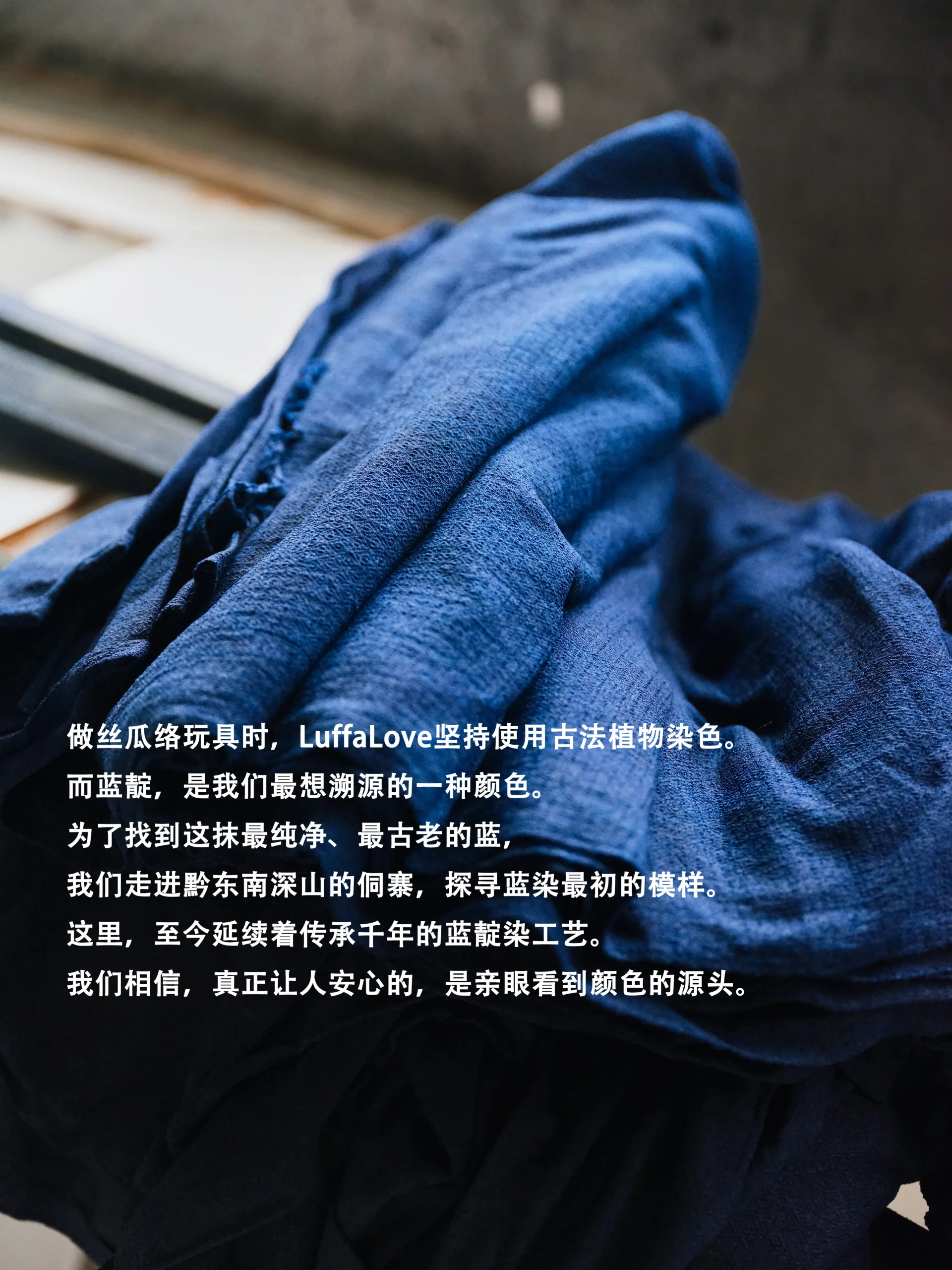
When making loofah toys, LuffaLove insists on using ancient natural dyeing methods.
And indigo blue is the color we most want to trace.
To find this purest and most ancient shade of blue,
we ventured deep into the mountainous Dong villages in southeastern Guizhou, to explore the original form of blue dye.
Here, the thousand-year-old indigo dyeing technique has been preserved to this day.
We believe that true peace of mind comes from seeing the source of color with one’s own eyes.
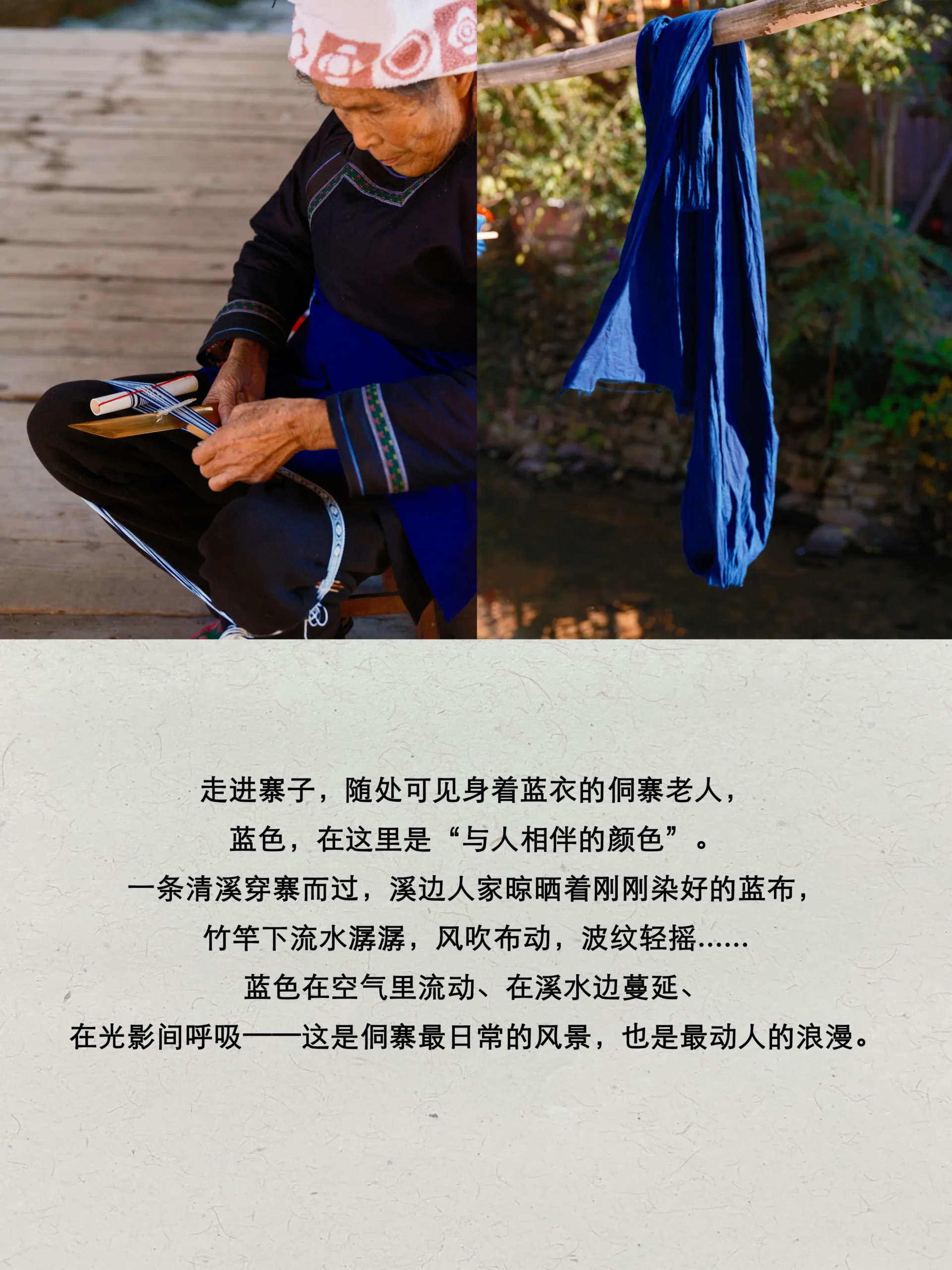
Entering the village, elderly Dong people in blue garments can be seen everywhere.
Blue, here, is “the color that accompanies people.”
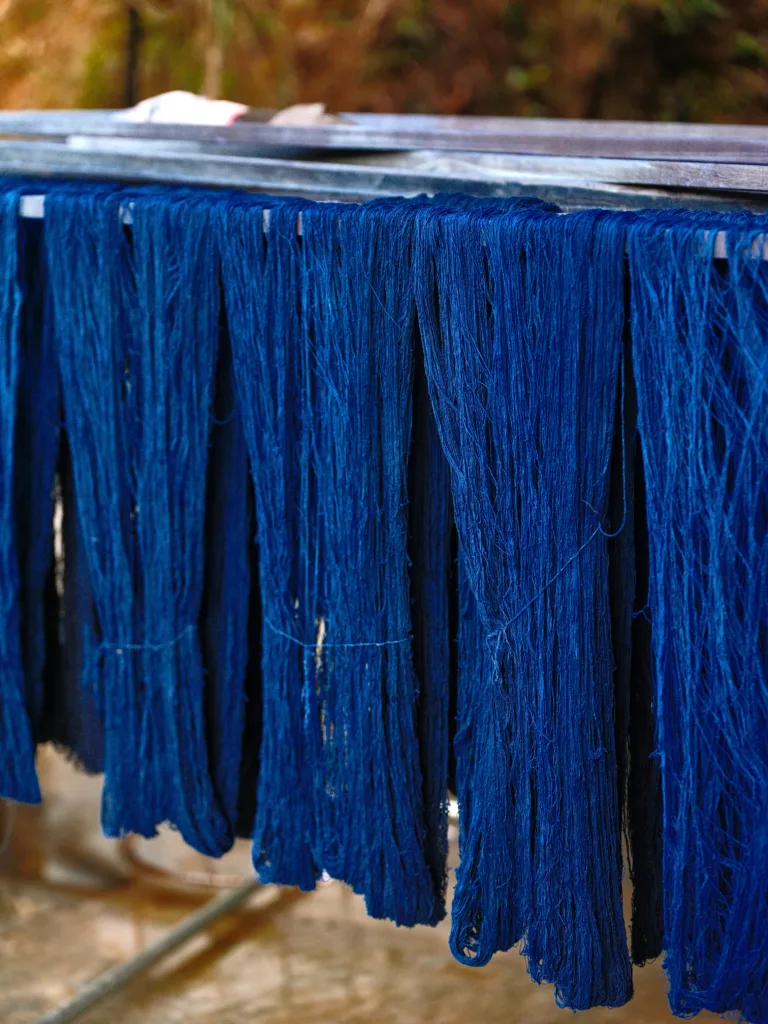
A clear stream runs through the village; by the stream, households are drying freshly dyed blue cloth.
Beneath the bamboo poles, the water murmurs, the cloth flutters in the wind, and ripples sway gently…
Blue flows in the air, spreads along the stream,
and breathes between light and shadow—this is the most everyday scene in the Dong village, and also its most touching romance.
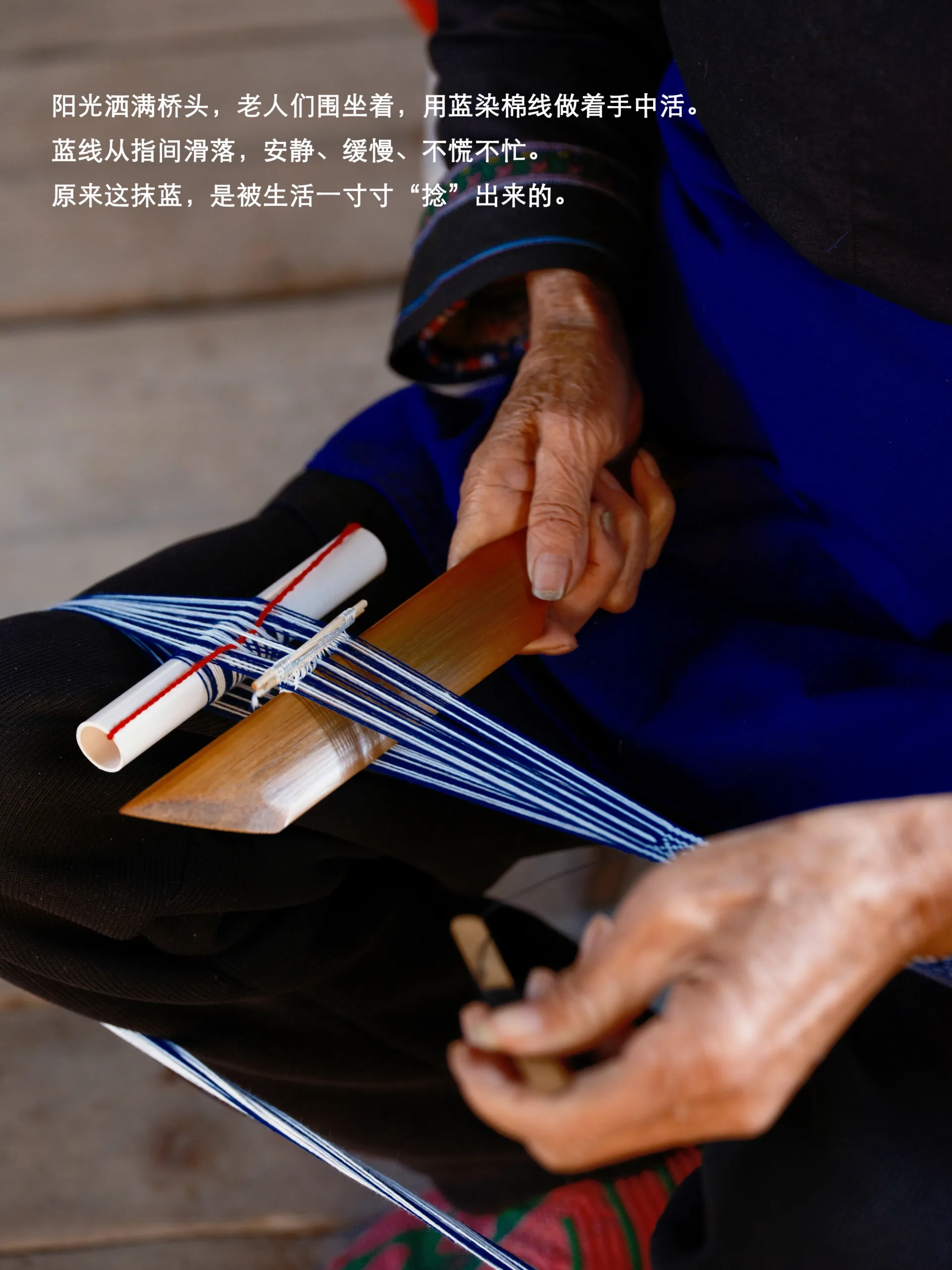
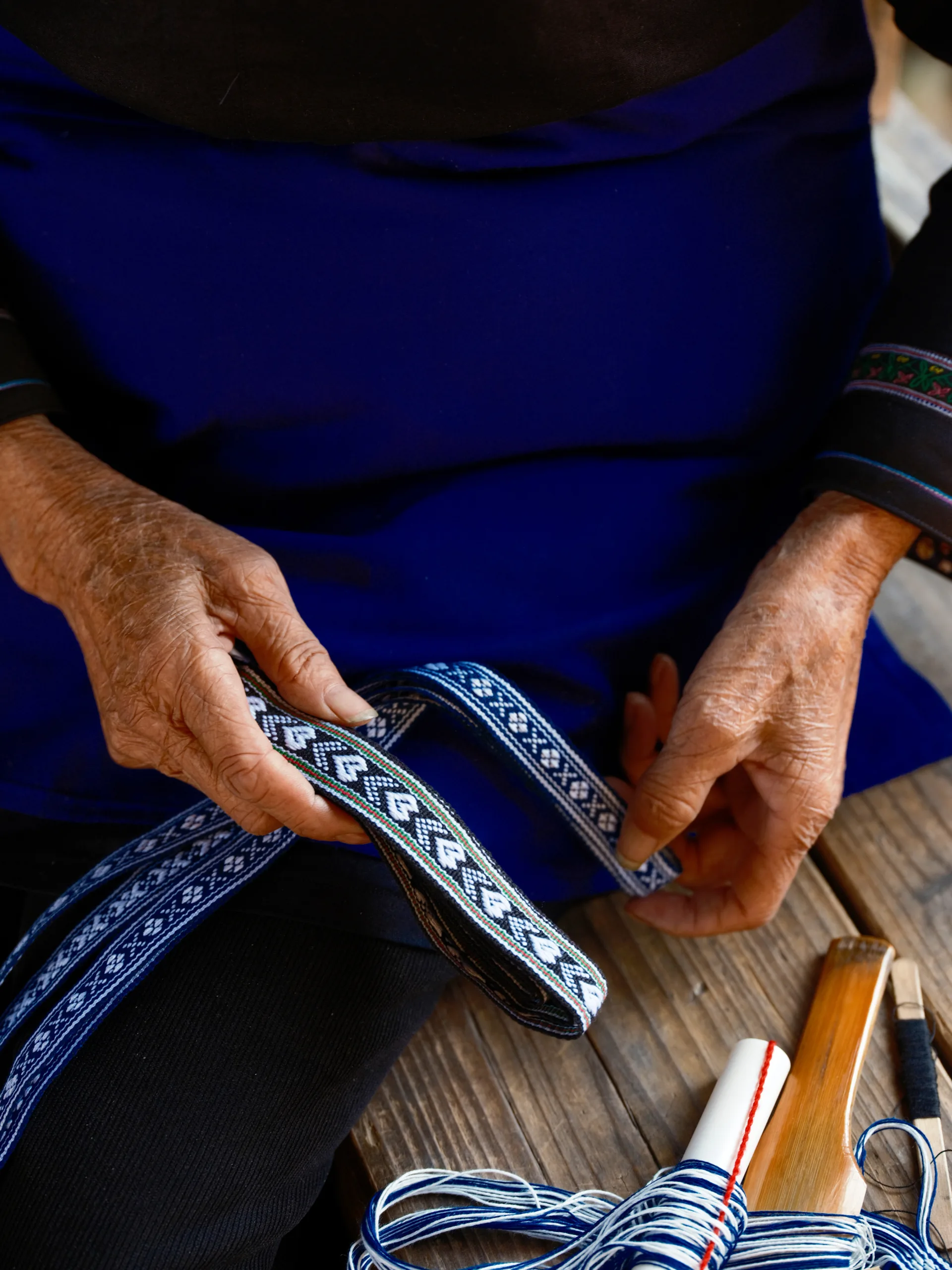
Sunlight spills over the bridgehead, where elderly women sit together, working with indigo-dyed cotton thread in their hands.
The blue thread slips through their fingers—quiet, slow, unhurried.
It turns out that this shade of blue is “twisted” out of life, inch by inch.
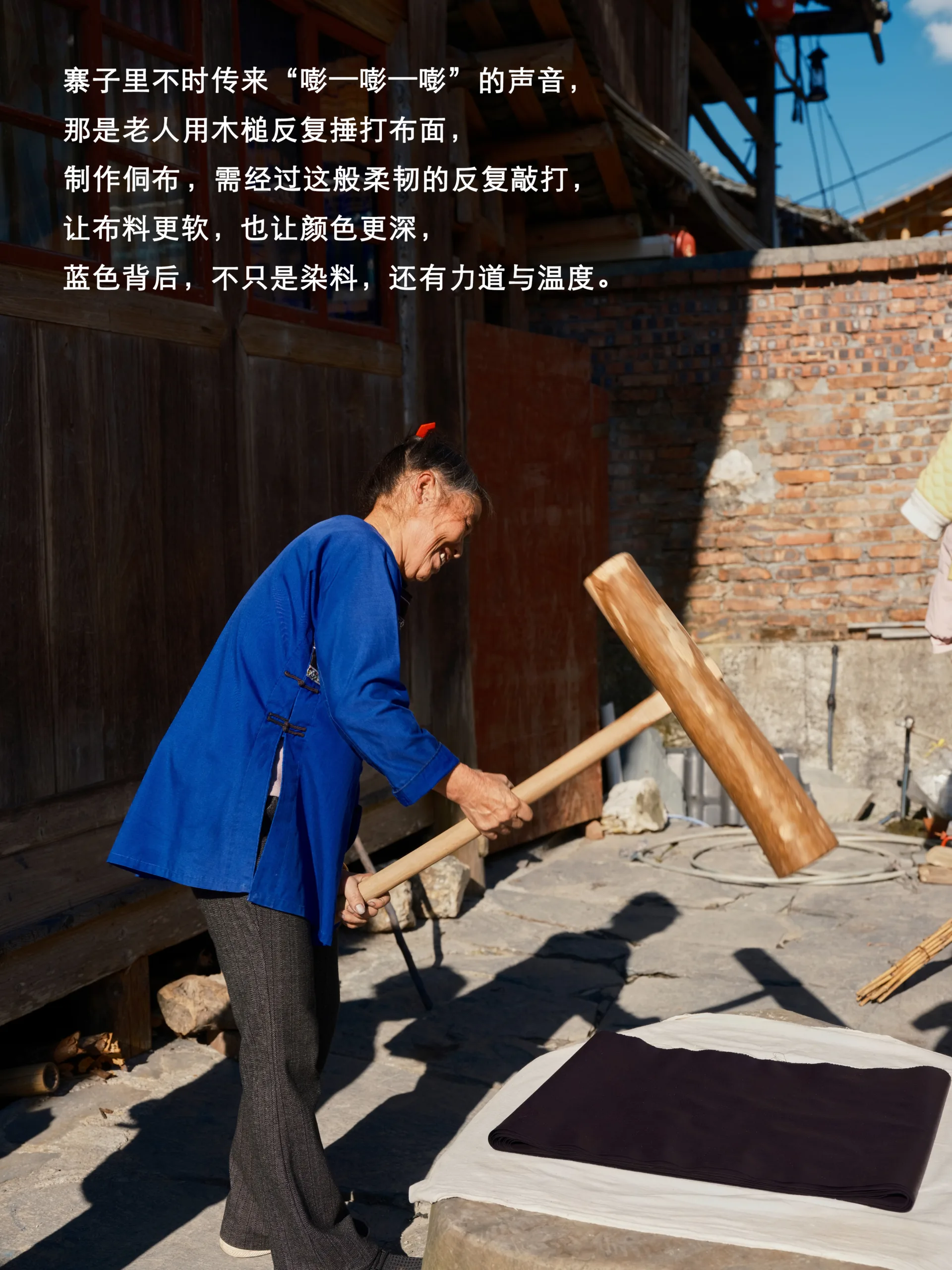
From time to time, the sound of “peng—peng—peng” echoes through the village—it is the elderly pounding the cloth repeatedly with wooden mallets.
To make Dong cloth, the fabric must undergo such resilient, repeated beating, to make it softer and to deepen its color.
Behind the blue lies not only the dye, but also strength and warmth.
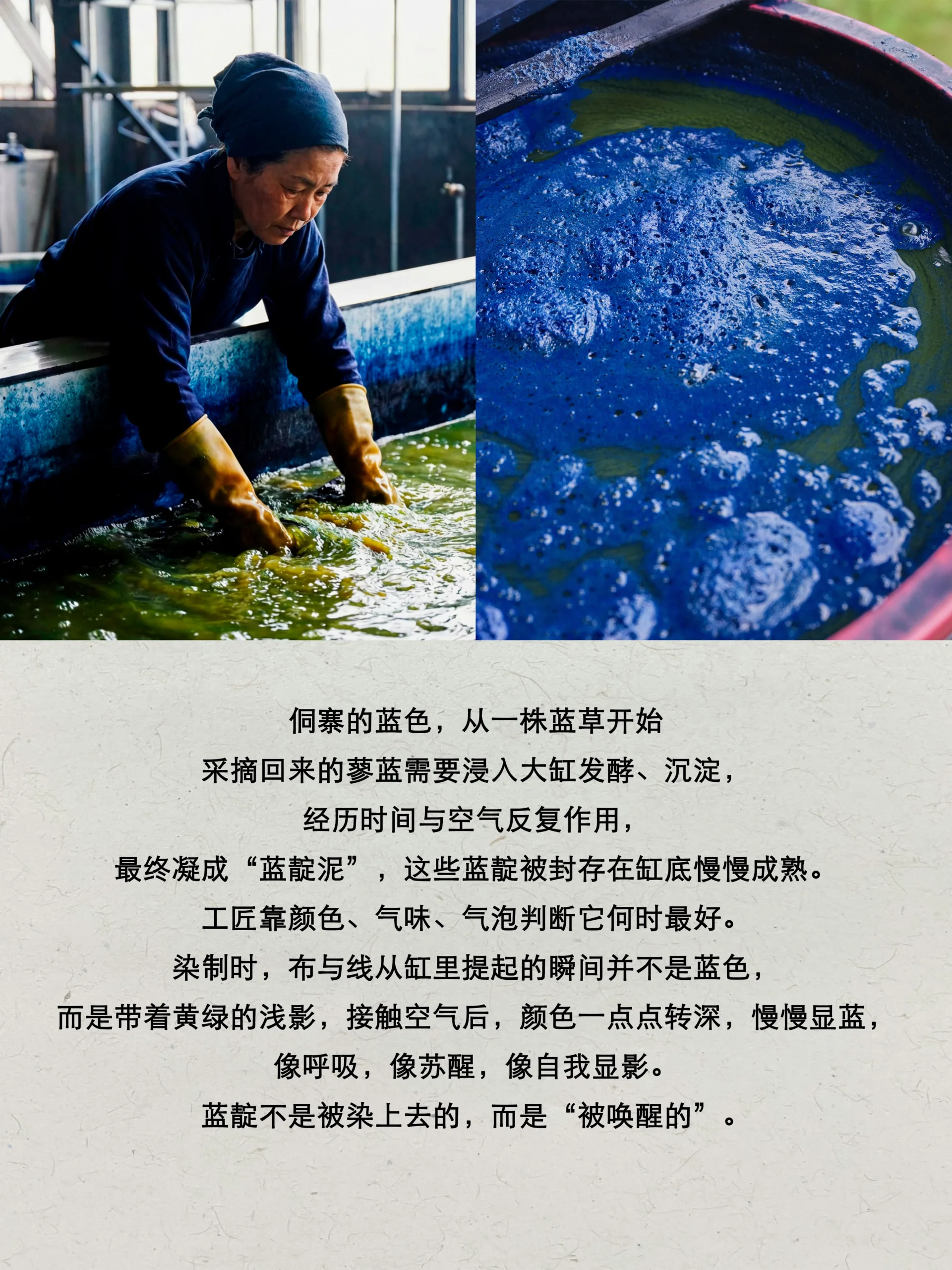
The blue of the Dong village begins with a single indigo plant.
The harvested indigo leaves are soaked in large vats to ferment and settle,undergoing repeated interactions with time and air,
until they finally condense into “indigo paste,” which is sealed at the bottom of the vats to slowly mature.
The artisans determine when it is at its best by its color, aroma, and bubbles.
During the dyeing process, when the fabric and threads are lifted from the vat, they are not blue at first—they appear as a light yellowish-green shadow. Only upon contact with the air does the color gradually deepen, slowly revealing itself as blue—like breathing, like awakening, like self-developing.
Indigo is not dyed onto the material; it is “awakened.”
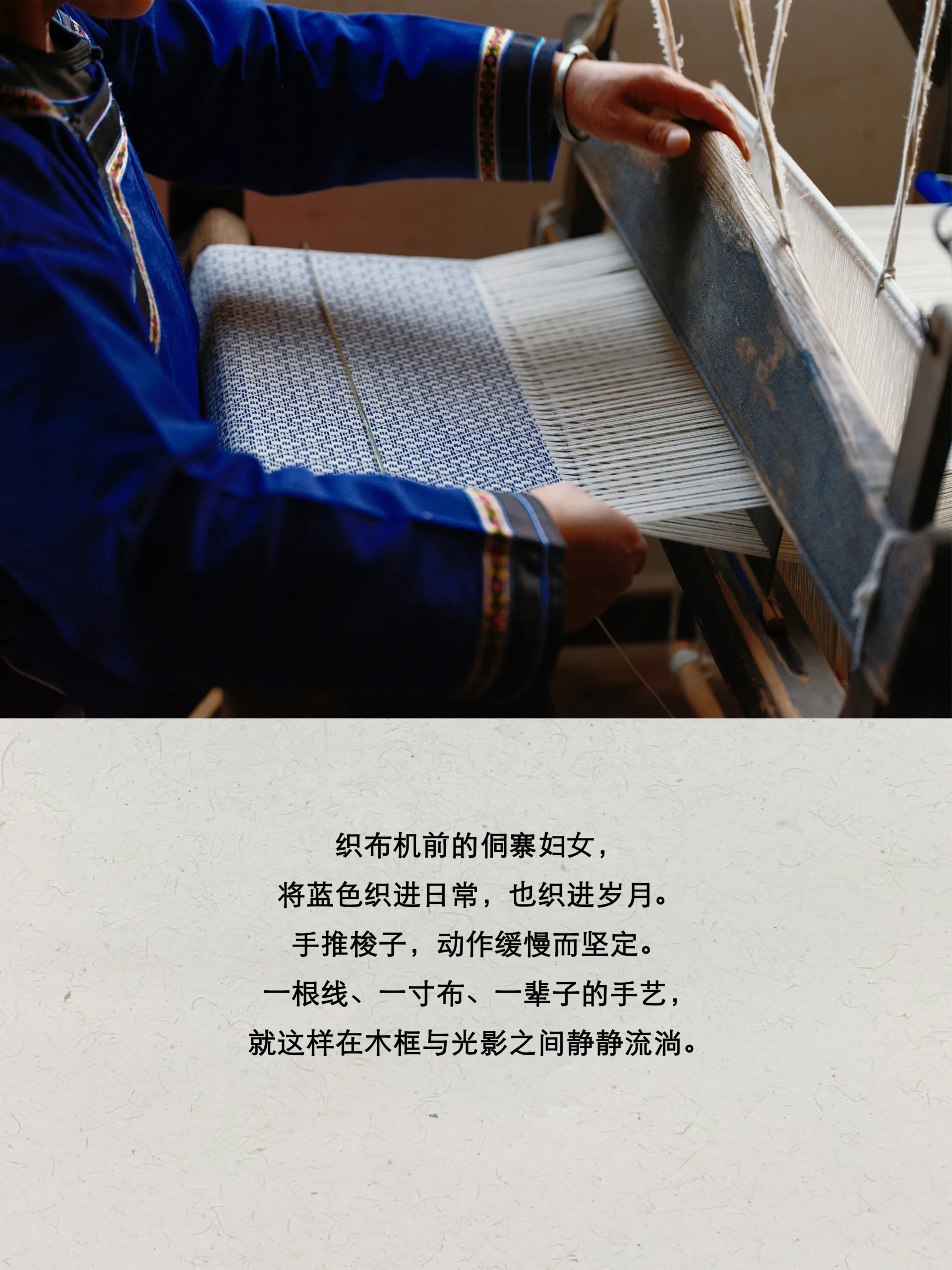
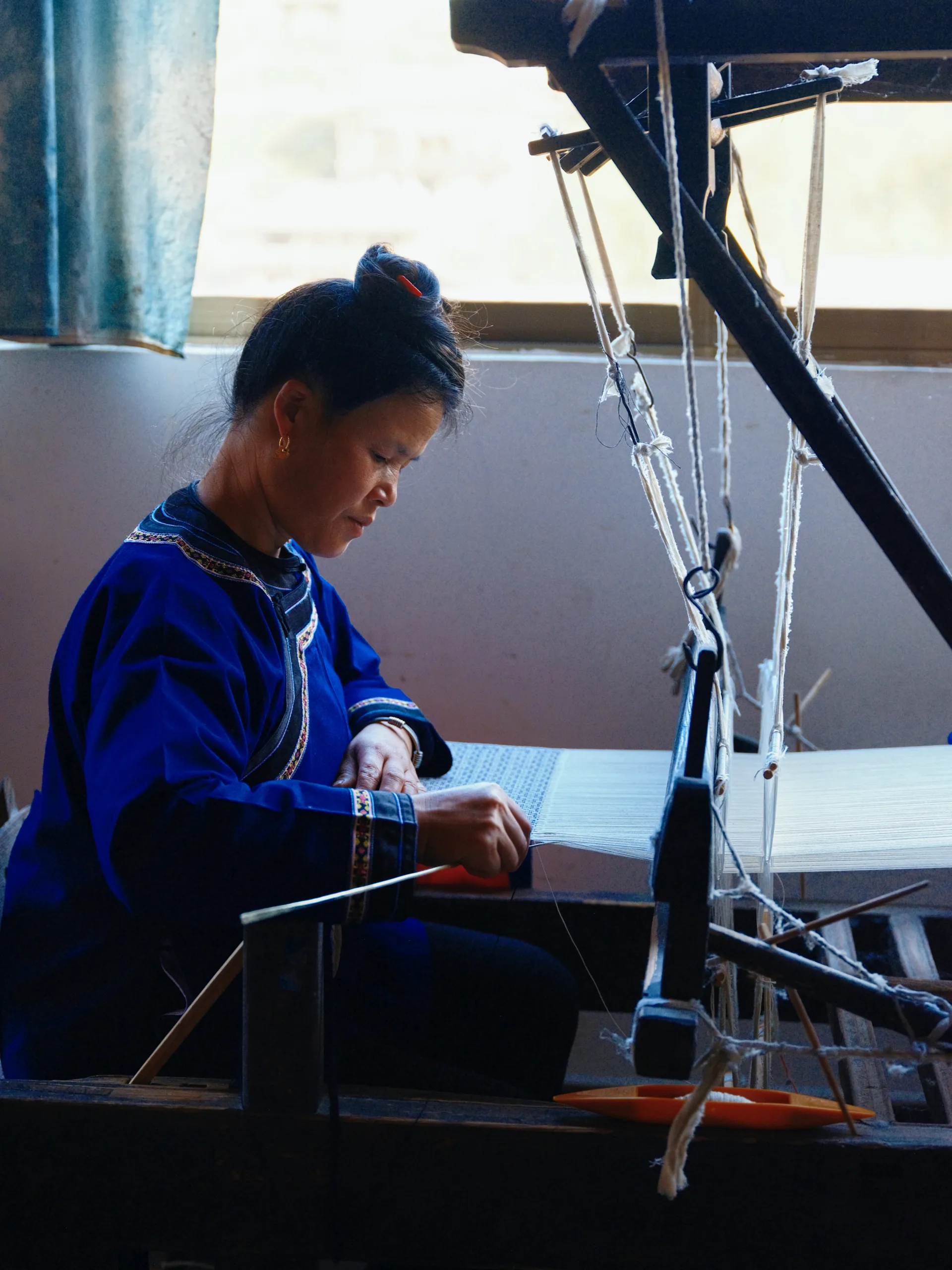
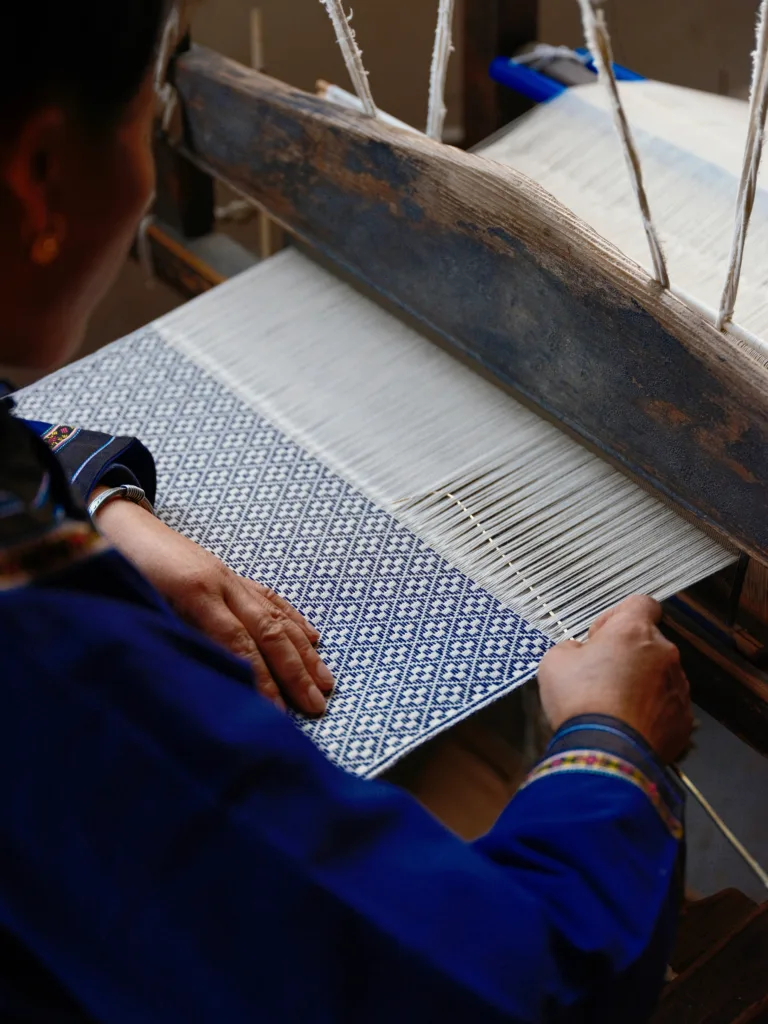
Women of the Dong village sit before the loom,
weaving blue into daily life, and into the passing years.
Their hands push the shuttle—slow yet steady.
A single thread, an inch of cloth, a lifetime of skill,all quietly flows between the wooden frame and the play of light and shadow.
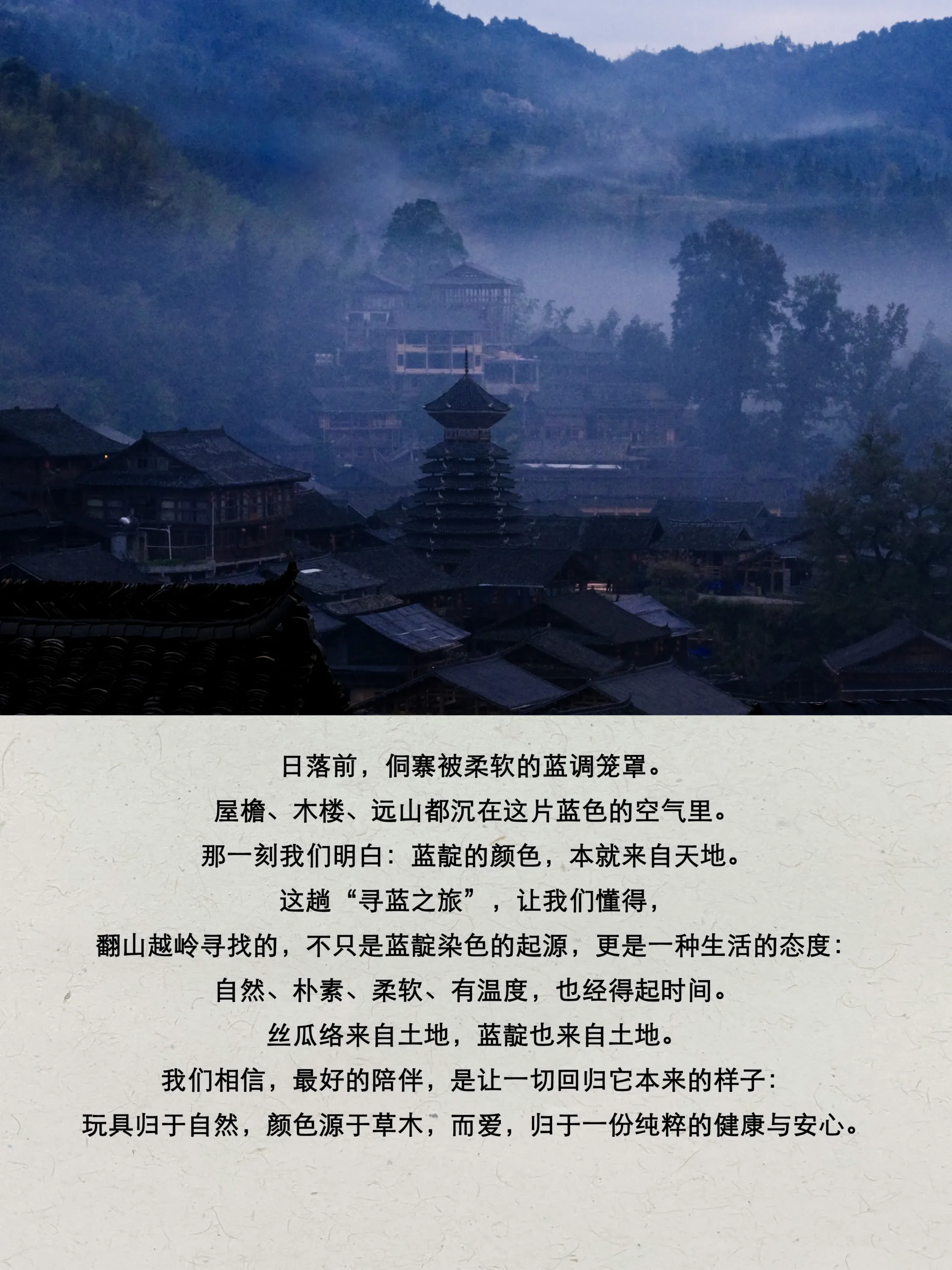
Before sunset, the Dong village is enveloped in a soft blue tone.
Roof eaves, wooden stilted houses, and distant mountains all rest in this blue-tinted air.
In that moment, we understood: the color of indigo comes from the very essence of heaven and earth.
This “journey in search of blue” made us realize that what we were seeking across mountains was not merely the origin of indigo dyeing, but a way of life:
natural, simple, soft, warm, and enduring.
Loofah comes from the land, and so does indigo.
We believe that the best companionship is letting everything return to its true nature:
toys rooted in nature, colors derived from plants, and love grounded in pure health and peace of mind.
